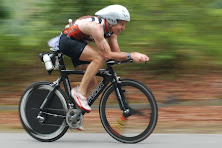
Not sure when, but he says "It's safe to say he'll do Kona".
Simon says: - How cool will that be?
Tuesday, September 08, 2009
Lance to do Kona


Monday, September 07, 2009
TBB Social Ride
 (Photos courtesy of Cycling Asia)
 I just wanted to make mention of The Bike Boutique's Social Ride on the 30th August. It was fabulous riding with such a big group of like-minded chaps and chapesses. I joined the group at MegaMall and had a great time chit-chatting all the way down to the turn off for Salak/PD.
 Aaron, Neil and a few others had made it clear that they were heading home at this point so as they peeled off to the left, I pulled over to the right side of the road, turned right and headed to Port Dickson. Moments later I looked behind and there was Disco Dave and Elaine but 70 riders had disappeared in the direction of Salak.
Oh well I thought maybe the drizzle had put them all off. Not me though, nor DD. Elaine was a tad worried that we'd got it wrong but I assured her that this route was a very well worn road that I'd been down many many times (staple diet of IMMY training).

 [A special note for Disco Dave and Elaine, DD kept riding away from me, I couldn't even stay with him drafting - I wasn't feeling my best but even so he's getting mighty strong. Elaine too was riding very strongly and had no problems with the pace, hills or anything that was thrown at her!!!]
As it turned out Daniel, who had set the route had somehow got it wrong and gone to Salak for a drink stop rather than the designated one at Sepang!!!! Oh well ay!
 Most people worked it out in the end and as it happens we were joined by about half the group at the coffee shop in PD and the other half stopped about 7K short in Lukut (lazy or what?).
 We re-grouped, took a group photo (which believe me took some organising - the terms "piss ups" and "breweries" came to mind!). That done I had to be back - family duty called so although I was physically spent I headed off and kept going until I hit Salak, grabbed a couple of drinks (Including Coke! When I reach for the Coke I know I'm hanging on by the fingernails).
I managed to get home before my deadline but there wasn't a cat in hells chance of me running - so that was that. A lovely day, excellent company, great support by TBB and Cycling Asia. A little lonely and tiring on the way home but that's what we have to endure sometimes.
Friday, September 04, 2009
Laugh or Cry?
(Courtesy of @WealthofHealth via Twitter)
I defy you not to laugh out loud to this one.
I defy you not to laugh out loud to this one.
Thursday, September 03, 2009
The Club for Crazies - "Vontoux Three (Four)"
(Courtesy of pezcyclingnews.com and Nick Flynn)
 The Club for Crazies
The Club des Cinglés du Mont-Ventoux, to use its French title, was started in 1988 by Christian Pic and has over 2,100 members: just over half are French, followed by Belgium, the Netherlands, Italy and the US. Joining the club is simple: climb to the summit of Mont Ventoux three times in one day, once by each of its three access roads. Yep, that’s it.
 There are four ways up the Ventoux - three paved, one dirt (that's a whole other story). Highlighted is the 'traditional' route up from Bedoin.
On paper the membership route looks tough. It’s not the 136 kilometres that’s the problem – it’s the fact that half of this is climbing. The classic route from Bedoin is 21 kilometres at an average of 7.5%, from Malaucene the same, and the third ascent is 26 kilometres at a merciful 4.7%. Mont Ventoux is 1,912 metres at its summit and the vertical distance for each route is 1,610m, 1,570m and 1,220m respectively for a total of 4,400 metres of climbing over 68 kilometres. This year’s Etape du Tour was only 2,612 metres over 39 kilometres. Cinglé in French means ‘crazy’ and has the synonym fou, ‘mad’. The Club des Cinglés du Mont-Ventoux is literally a club for mad crazies.
For the full article click here
Simon says: - Clearly this has to be done, there is simply no question about it, end of discussion! I can't see much point in doing the Vontoux Three as there are too many members already. The Ventoux Three Four which includes the off road ascent is the one I have my eye on. Anyone fancy joining me?
 The Club for Crazies
The Club des Cinglés du Mont-Ventoux, to use its French title, was started in 1988 by Christian Pic and has over 2,100 members: just over half are French, followed by Belgium, the Netherlands, Italy and the US. Joining the club is simple: climb to the summit of Mont Ventoux three times in one day, once by each of its three access roads. Yep, that’s it.
 There are four ways up the Ventoux - three paved, one dirt (that's a whole other story). Highlighted is the 'traditional' route up from Bedoin.
On paper the membership route looks tough. It’s not the 136 kilometres that’s the problem – it’s the fact that half of this is climbing. The classic route from Bedoin is 21 kilometres at an average of 7.5%, from Malaucene the same, and the third ascent is 26 kilometres at a merciful 4.7%. Mont Ventoux is 1,912 metres at its summit and the vertical distance for each route is 1,610m, 1,570m and 1,220m respectively for a total of 4,400 metres of climbing over 68 kilometres. This year’s Etape du Tour was only 2,612 metres over 39 kilometres. Cinglé in French means ‘crazy’ and has the synonym fou, ‘mad’. The Club des Cinglés du Mont-Ventoux is literally a club for mad crazies.
For the full article click here
Simon says: - Clearly this has to be done, there is simply no question about it, end of discussion! I can't see much point in doing the Vontoux Three as there are too many members already. The Ventoux Three Four which includes the off road ascent is the one I have my eye on. Anyone fancy joining me?
4 Reasons Why Most Diets Fail
(Courtesy of Active.com and the Editors of Best Life)
 Nutritionists agree that most diets aren't worth the paper they're printed on. They realize that the key to losing weight is adopting a sound, sustainable eating plan and then sticking with it, rather than opting for some wacko quick fix.
Problem #1: Diets don't last.
The problem with virtually all diets is the short-term mindset into which they feed. Most guys approach diets as an all-or-nothing proposition. Rather than making small, even incremental changes in lifestyle that can last a lifetime, diets encourage you to turn your life inside out for two weeks or so. Yet once those two weeks are over and you return to your old habits, guess what? Your body returns to its former state as well. If there's a rule of thumb to be had in this regard, it's that small changes last and big ones don't. Saying that you'll change everything you're doing wrong starting on Monday morning and straight-line it from there might sound impressive — and earn you some pats on the back — but it doesn't change your underlying behavior patterns. It's the slow, steady route that ultimately leads to success.
Problem #2: Diets make you hungry.
Diets typically treat fat loss as a function of nutrition only, when training is equally important. The diet world is about tearing down, and sports nutrition is about building up. You'll lose weight by creating a calorie deficit — burning more calories than you eat. You'll create that deficit, however, mostly through training and not through drastic dieting. The calories you burn in the weight room added to the metabolism boost you get from muscle growth will kick your body into fat-burning mode — without making you hungry.
Problem #3: Diets make you tired.
A chronic problem with diets is that so many of them are simply too low in calories. Because they don't provide enough energy for you to do your workouts and accomplish everything else you need to do in a day, they're a short-term solution at best. Even when weight-loss programs incorporate exercise — and, astonishingly, many don't — they typically ask you to eat like a gerbil and then train like a hamster by running or cycling endlessly in place. You may shed a few pounds in the short run, but you'll also forsake muscle, and the resulting metabolic downshift will soon take you back to square one. Whether it's being done on a treadmill, a stationary bike, or a squeaky metal cylinder, endless cardio performed on restricted calories is a road to nowhere, literally and figuratively.
This is especially true if you're following one of the ultra-low-carb diets that are so popular now. Carbohydrates are the primary energy source for physical activity, and decades of research has shown that low-carb diets don't adequately support strenuous physical activity or athletic performance for extended periods of time. In contrast, a diet moderate in carbs will supply enough energy for the average Joe to stay active and still burn fat. Endurance exercise requires more carbohydrates than strength training does, but in neither case will training be optimized without sufficient carbs.
Problem #4: Diets cannibalize your muscle.
Diets also tend to pay too little attention to supporting muscle mass during periods of caloric restriction. This is important for more than just aesthetic reasons. And when you lose muscle, your basal metabolic rate drops, and you don't burn as many calories.
Most guys try to burn off the fat first and then build the muscle. To do that, you have to lower your calories so far that you don't have the energy to train hard in the gym. You burn more muscle than fat, lowering your metabolic rate and setting the stage for weight gain.
Simon says: - I'm a perpetual dieter, people who don't know me well think I'm really disciplined - sadly I'm not, or more accurately I am but only in short bursts.
What I do find is that it's much easier to eat sensibly and in moderation if I'm training regularly. By that I mean everyday. It helps me stay focused and not have a blow out on food and drink (I still occasionally do but then that's allowed, no point taking out all the joys of life).
The key, as I've emboldened above is making small incremental changes to your lifestyle that are sustainable OVER A WHOLE LIFETIME. If you don't follow this fundamental rule then YOU WILL FAIL. It's as simple as that.
Another great bit of knowledge I gained somewhere which supports the solution to Problem #3 above is: - "Burn fat in a carbohydrate flame". People shy away from carbs and this is a mistake YOU NEED THEM to do the exercise to burn the fat. This leads on to Problem #4 which touches on the need for muscle growth (or retention at least), for this you also need a decent intake of protein.
So carbs and protein but cut out the fat right? WRONG, fat is an important part of the diet too especially for the immune system but only good fats (not McD's fries). Really what I'm getting around to saying is to do what we all know, is blatantly obvious but usually ignored or forgotten and that's EAT A BALANCED DIET.
If you want to lose weight then you need to have a calorie deficit but for sustainability must not be too extreme and is supported by sensible eating AND exercise. Add consistency (i.e. make it part of your lifestyle for the rest of your life) and voila you're sorted, slim, healthy, fit and if you take sport seriously you'll probably be fast too (1kg = 3 seconds per kilometre. Therefore if you're 10kg overweight then you are giving away 5 minutes in a 10k run before you've even started! Think about it, it' simple physics).
So there you have it, simple ay? Well, Yes and no. I struggle with this everyday and I have reproduced this article and added my own thoughts as much as a reminder for myself as anyone else. I hope it serves its purpose for all of us.
 Nutritionists agree that most diets aren't worth the paper they're printed on. They realize that the key to losing weight is adopting a sound, sustainable eating plan and then sticking with it, rather than opting for some wacko quick fix.
Problem #1: Diets don't last.
The problem with virtually all diets is the short-term mindset into which they feed. Most guys approach diets as an all-or-nothing proposition. Rather than making small, even incremental changes in lifestyle that can last a lifetime, diets encourage you to turn your life inside out for two weeks or so. Yet once those two weeks are over and you return to your old habits, guess what? Your body returns to its former state as well. If there's a rule of thumb to be had in this regard, it's that small changes last and big ones don't. Saying that you'll change everything you're doing wrong starting on Monday morning and straight-line it from there might sound impressive — and earn you some pats on the back — but it doesn't change your underlying behavior patterns. It's the slow, steady route that ultimately leads to success.
Problem #2: Diets make you hungry.
Diets typically treat fat loss as a function of nutrition only, when training is equally important. The diet world is about tearing down, and sports nutrition is about building up. You'll lose weight by creating a calorie deficit — burning more calories than you eat. You'll create that deficit, however, mostly through training and not through drastic dieting. The calories you burn in the weight room added to the metabolism boost you get from muscle growth will kick your body into fat-burning mode — without making you hungry.
Problem #3: Diets make you tired.
A chronic problem with diets is that so many of them are simply too low in calories. Because they don't provide enough energy for you to do your workouts and accomplish everything else you need to do in a day, they're a short-term solution at best. Even when weight-loss programs incorporate exercise — and, astonishingly, many don't — they typically ask you to eat like a gerbil and then train like a hamster by running or cycling endlessly in place. You may shed a few pounds in the short run, but you'll also forsake muscle, and the resulting metabolic downshift will soon take you back to square one. Whether it's being done on a treadmill, a stationary bike, or a squeaky metal cylinder, endless cardio performed on restricted calories is a road to nowhere, literally and figuratively.
This is especially true if you're following one of the ultra-low-carb diets that are so popular now. Carbohydrates are the primary energy source for physical activity, and decades of research has shown that low-carb diets don't adequately support strenuous physical activity or athletic performance for extended periods of time. In contrast, a diet moderate in carbs will supply enough energy for the average Joe to stay active and still burn fat. Endurance exercise requires more carbohydrates than strength training does, but in neither case will training be optimized without sufficient carbs.
Problem #4: Diets cannibalize your muscle.
Diets also tend to pay too little attention to supporting muscle mass during periods of caloric restriction. This is important for more than just aesthetic reasons. And when you lose muscle, your basal metabolic rate drops, and you don't burn as many calories.
Most guys try to burn off the fat first and then build the muscle. To do that, you have to lower your calories so far that you don't have the energy to train hard in the gym. You burn more muscle than fat, lowering your metabolic rate and setting the stage for weight gain.
Simon says: - I'm a perpetual dieter, people who don't know me well think I'm really disciplined - sadly I'm not, or more accurately I am but only in short bursts.
What I do find is that it's much easier to eat sensibly and in moderation if I'm training regularly. By that I mean everyday. It helps me stay focused and not have a blow out on food and drink (I still occasionally do but then that's allowed, no point taking out all the joys of life).
The key, as I've emboldened above is making small incremental changes to your lifestyle that are sustainable OVER A WHOLE LIFETIME. If you don't follow this fundamental rule then YOU WILL FAIL. It's as simple as that.
Another great bit of knowledge I gained somewhere which supports the solution to Problem #3 above is: - "Burn fat in a carbohydrate flame". People shy away from carbs and this is a mistake YOU NEED THEM to do the exercise to burn the fat. This leads on to Problem #4 which touches on the need for muscle growth (or retention at least), for this you also need a decent intake of protein.
So carbs and protein but cut out the fat right? WRONG, fat is an important part of the diet too especially for the immune system but only good fats (not McD's fries). Really what I'm getting around to saying is to do what we all know, is blatantly obvious but usually ignored or forgotten and that's EAT A BALANCED DIET.
If you want to lose weight then you need to have a calorie deficit but for sustainability must not be too extreme and is supported by sensible eating AND exercise. Add consistency (i.e. make it part of your lifestyle for the rest of your life) and voila you're sorted, slim, healthy, fit and if you take sport seriously you'll probably be fast too (1kg = 3 seconds per kilometre. Therefore if you're 10kg overweight then you are giving away 5 minutes in a 10k run before you've even started! Think about it, it' simple physics).
So there you have it, simple ay? Well, Yes and no. I struggle with this everyday and I have reproduced this article and added my own thoughts as much as a reminder for myself as anyone else. I hope it serves its purpose for all of us.
Wednesday, September 02, 2009
Cabinet For Sale - Excess to requirements
 AUSTRALIAN MANUFACTURED CABINET FOR SALE
Cabinet for Sale - details below
DISPLAY CABINET, one of the most elegant and functional display cabinets
currently on the market.
Features
o Fine timber details
o 4 leadlight options
o 4 side access doors (there is maximum frontal display)
o Adjustable shelves are extra deep to accommodate large items
o Halogen down lights
o Mirror back with glass shelves provide max illumination of collectables from top to bottom.
To give indication of size of the Cabinet it previously held the following:
o Rugby League World Cup
o Rugby Union World Cup
o International Rules Trophy
o Tri Nations Trophy
o Super-12 Trophy
o Trans-Tasman Touch Football Trophy
o Davis Cup
o Hockey World Championship Trophy
o Bledisloe Cup.
o Ashes urn.
All these trophies are now overseas and the Cabinet is excess to requirements.
To make an offer call R Stuart, R Ponting, S Mortlock or P. Fitzsimons who once commented "The Australian Cabinet is groaning under the weight of all the trophies!"
They can be contacted on: 1800-LOST-THE-LOT
Kirsty - what happened to you?
 Wasn't this taken just yesterday? It feels like it!
 The little girl on my shoulders is the one centre left looking rather gorgeous, elegant and sophisticated.
What happened to my little baby niece? (Yeah I know, what happened to me too?!!)
Where's the exhaust, officer?
(Courtesy of David Clenton)
 I think I may have blogged this before but worth a giggle again. Clearly someone in the marketing department forgot about the position of the buses exhaust pipe - or did they?
 I think I may have blogged this before but worth a giggle again. Clearly someone in the marketing department forgot about the position of the buses exhaust pipe - or did they?
Friday, August 28, 2009
77 years old and Arrrrggggghhhhhh
So here we have it, my Dad on his 77th birthday said that he liked what Shilpa and I did so much yesterday that he'd like to have a go himself. I was amazed at how calm he was but then when you look closely you'll see the vice like grip on the handles and his attempt to avoid a heart attack while still keeping his teeth in.
Great sport Dad, well done.
Can you believe it, he said he preferred paragliding (another of his recent exploits). My Mum thinks he's lost his marbles.
From the BungyCam
From the GrannyCam
Great sport Dad, well done.
Can you believe it, he said he preferred paragliding (another of his recent exploits). My Mum thinks he's lost his marbles.
From the BungyCam
From the GrannyCam
Arrrrrrrrrgggggggghhhhhhhhhh!
In Paris at the Fun Fair, I suggested to Shilpa that we might try something a bit more exciting than the Ferris Wheel...
Taken from the BungyCam - Mad or what?
Taken from the GrandadCam
Next day was my Dad's 77th Birthday and guess what he decided he wanted to do to celebrate it? That'll be the next post. Have a chuckle at our expense with this one first.
Taken from the BungyCam - Mad or what?
Taken from the GrandadCam
Next day was my Dad's 77th Birthday and guess what he decided he wanted to do to celebrate it? That'll be the next post. Have a chuckle at our expense with this one first.
Thursday, August 27, 2009
France - Friends, Family and Birthdays
 Shilpa had arranged to meet Beatrice and her twin boys while we were in Paris. Beatrice & Bernard were part of the Twins Group in KL when they were based there. They are now back in France. We really miss them but it was wonderful to catch up, especially for the girls.
 We met at the Jardin des Plantes, near to Notre Dame and just a short walk from the Batobus stop. They have a Zoo there too, the boys (including me just loved it).
 Shilpa and Beatrice - good friends are hard to come by.
 I wonder who these too rather curious young chaps are?
 Later we met up with one of Shilpa's college friends, Chandani, at the Eiffel Tower. We left the girls to it, Grandma and Grandad went off for a well earned rest (in preparation for Dad's 77th birthday dinner) and the boys went on a horse buggy ride - AWESOME.
 "Hey Seb, these horses are flippin big aren't they?"
 Later that evening we celebrated Dad's birthday - here he is looking very cheerful and philosophical.
 Mum making sure everyone was behaving.
 Shilpa and Chandani getting stuck into to the wine.
 Dad getting stuck into his bucket of beer. He was feigning shock at the size of it but then he didn't seem to have any trouble putting a few of them away - I guess it was his birthday after all.
 As you can see Shilpa and Chandani were having a rather fun time and rather a lot of wine. This is what they looked like before we'd even finished dinner.
 Happy birthday Dad.
 When it came to bedtime, Grandad knows best and there he was assuming his role as the responsible Grandad with Sid and Seb obediently following. Impressive stuff.
 Happy birthday Grandad, night night all.
We were all leaving the next day, the end off our holiday boo hoo boo hoo! Grandma and Grandad back to England and us back to Kuala Lumpur. What a great holiday and a lovely note to finish up on.
Shilpa stayed out on a bit of a girls night out with Chandani while Daddy did the dutiful thing and babysat the boys.
Wednesday, August 26, 2009
Fresh Air Fund
Hi Simon
I wanted to write you a quick note to let you know that our 2009 Fresh Air Fund-Racers completed the NYC half marathon and raised a whopping $80,000 this summer! We are really thrilled and just wanted to thank everyone who supported us. I've posted some photos onto our Facebook page here:
http://www.facebook.com/freshairfund
Please become a fan if you aren't already. If you'd like to share this wonderful news on Tritwins or on Twitter that would be great. Our twitter handle is @freshairfund. Please shoot me back the link if you do so I can share it with the rest of the team.
Thank you so very much,
Sara
--
Sara Wilson, Fresh Air Fund
sara@freshair.org
www.freshair.org
I wanted to write you a quick note to let you know that our 2009 Fresh Air Fund-Racers completed the NYC half marathon and raised a whopping $80,000 this summer! We are really thrilled and just wanted to thank everyone who supported us. I've posted some photos onto our Facebook page here:
http://www.facebook.com/freshairfund
Please become a fan if you aren't already. If you'd like to share this wonderful news on Tritwins or on Twitter that would be great. Our twitter handle is @freshairfund. Please shoot me back the link if you do so I can share it with the rest of the team.
Thank you so very much,
Sara
--
Sara Wilson, Fresh Air Fund
sara@freshair.org
www.freshair.org
Tuesday, August 25, 2009
France - Paris
Sadly and very reluctantly we had to leave Sam and Carmen and travel to Paris. The consolation was that we'd be seeing Grandma and Grandad (my Mum and Dad). Also Shilpa had planned to meet up with a couple of her friends too.
Having checked in, we met Mum and Dad and then headed straight out to the Eiffel Tower. The queues were as usual enormous but we decided that since the weather was so wonderful and we had so much to do in the three short days that we had in Paris, we'd wait it out.
Mum and Dad took one look at the crowds and decided it wasn't for them so they took leisurely stroll while we battled to the top.
 Paris is one of the most, probably the most beautiful city in the world.
 Views down the Seine towards Notre Dame.
 Champs Elysee.
 Shilpa and the boys.
 Me and the boys.
 Afterwards we met up with Mum and Dad and walked to the Seine, with the plan to take the Batobus. This is a cool tourist boat/taxi that takes in all the sites up and down the river.
 Brotherly love.
 Mum and Dad a.k.a. Grandma and Grandad enjoying their boat ride with their daughter-in-law, grandtwins and little baby son (me).
 We hoped off the Batobus at the Louvre, had a bit to eat and then you guessed it (no not the Mona Lisa) - the funfair. Daddy and the boys hitting the Ferris Wheel. Spot the support team.
 Blackpool Tower?
 The Louvre and the Pyramid.
 Oh what joy, the boys found a Sport Car Ride - they were in heaven.
 Happy families. Waiting for the Batobus to take us home - everyone is getting pretty tired by now.
 A beautiful model agreed to let me take her picture with the Eiffel Tower in the background.
Simon Says: - When we were riding on the Batobus we saw a man throw himself into the river. It was all very traumatic.
We later found out he was in-Seine
Having checked in, we met Mum and Dad and then headed straight out to the Eiffel Tower. The queues were as usual enormous but we decided that since the weather was so wonderful and we had so much to do in the three short days that we had in Paris, we'd wait it out.
Mum and Dad took one look at the crowds and decided it wasn't for them so they took leisurely stroll while we battled to the top.
 Paris is one of the most, probably the most beautiful city in the world.
 Views down the Seine towards Notre Dame.
 Champs Elysee.
 Shilpa and the boys.
 Me and the boys.
 Afterwards we met up with Mum and Dad and walked to the Seine, with the plan to take the Batobus. This is a cool tourist boat/taxi that takes in all the sites up and down the river.
 Brotherly love.
 Mum and Dad a.k.a. Grandma and Grandad enjoying their boat ride with their daughter-in-law, grandtwins and little baby son (me).
 We hoped off the Batobus at the Louvre, had a bit to eat and then you guessed it (no not the Mona Lisa) - the funfair. Daddy and the boys hitting the Ferris Wheel. Spot the support team.
 Blackpool Tower?
 The Louvre and the Pyramid.
 Oh what joy, the boys found a Sport Car Ride - they were in heaven.
 Happy families. Waiting for the Batobus to take us home - everyone is getting pretty tired by now.
 A beautiful model agreed to let me take her picture with the Eiffel Tower in the background.
Simon Says: - When we were riding on the Batobus we saw a man throw himself into the river. It was all very traumatic.
We later found out he was in-Seine
Confessions of a running addict
(Courtesy of Angela Burkart and the Telegraph)
 It appears I'm in denial. There I was, smug at how much running I do, gloating that Government diktats on healthy living don't apply to me. But apparently I'm no better than a heroin addict. Scientists reported last week that "excessive running shares similarities with drug-taking behaviour".
One expects this kind of thing about extreme sports, whose devotees relish the association of being called "adrenalin junkies". But the researchers were talking about running, the same activity encouraged by virtually everyone in the health industry.
They found that too much of it sparks a reaction in the brain that is similar to heroin – and it is just as addictive. It gets worse. Sudden withdrawal can lead to trembling, writhing and teeth chattering.
Writing in the medical journal Behavioural Neuroscience, the researchers found that a desire to get off the sofa and shed a few pounds can quickly become as compulsive as Class A narcotics. So mild exercise like jogging can develop into a serious triathlon or marathon habit. "Although exercise is good for your health, extreme exercise may be physically addictive," they warned.
Tell me about it. My story began with a simple desire to get fit. I signed up to the London Marathon. Like many people, I found the mix of camaraderie, excitement and finish-line euphoria a heady cocktail – and I was hooked.
Once the blisters had healed and the memory of painful muscles had subsided, I had one abiding thought. What next? Before I knew it I was on a one-way slippery slope to harder stuff – ultra marathons, five-day, non-stop races and extreme triathlons.
In what has become a familiar rite of passage for thousands of Britons, I signed up to the Marathon des Sables, a 150-mile run across the Sahara desert. This is where City boys, the SAS and the likes of Ben Fogle come to test themselves.
A behavioural psychologist would have had a field day among the 600 entrants; many have addictive personalities. In my tent was a former alcoholic ex-para who'd swapped booze for extreme physical tests. He told us proudly how he'd once done 10,000 sit-ups – in a day.
Rory Coleman is typical of many reformed characters who've done the race. Fifteen years ago, he was an overweight alcoholic with a 40-a-day smoking habit. Told by a doctor that he'd be lucky to make 40, he traded the pub for a pair of trainers.
Three months later, he ran a half marathon, then a year after that the London Marathon. Since then, the 47-year-old has clocked 619 marathons. A normal week sees him running 100 miles. "I'm somebody that needs exercise," he says. "I don't ever intend to stop. But I'm not addicted to running," he claims. "I've just made it a part of my life. And it's a positive thing – have you ever met a heroin addict who says they enjoy it?"
Mimi Anderson, 47, says her friends often comment that she's just swapped one addiction for another. For fifteen years she suffered from anorexia. Now an "ultra-runner", she regularly competes in marathons in excess of 100 miles. Last year she broke the female John O'Groats to Land's End running record, covering the 840 miles in 12 days and 15 hours (averaging 65 miles a day).
Like the rats that were denied exercise in the study, she says she gets twitchy after a week of no training. "Normally I run seven days a week, but my husband has told me I can only do six. He gets really cross with me. I've just got back from one race and I'm about to do another. It is an addiction," the grandmother concedes. "But it's a healthy one."
It's also highly intoxicating. In the endurance athlete bible, Survival of the Fittest, Dr Mike Stroud explains how opiate drugs like heroin create artificially what the body produces naturally. In other words, if you want to get high, forget heroin, take up running.
The cocktail of drugs the body produces include the pain-relievers endorphins and dopamine (also produced during orgasm), the anti-depressant serotonin and the "fight or flight" hormone adrenalin, which increases strength and concentration. It's quite a cocktail.
When the finish line of the Marathon des Sables came into view after running 150 miles, it was as though someone rammed a needle of adrenalin in my chest. One minute I was hobbled over like an early hominid, stumbling on bruised, battered and blistered feet. The next I was like Usain Bolt, sprinting to the finish line, arms aloft.
Extreme running can also induce the same effects of amphetamines. Last year, 48 hours into a non-stop (no-sleep) race across Ireland, I started hallucinating. A team-mate had to drag me away from jabbing a rock with my walking pole. I was convinced it was a deposit box full of money.
This brings a novel argument in the debate against drugs. No one has stood up and pointed out an uncomfortable truth, that they're a poor substitute. A cocaine high apparently lasts a mere 15 minutes. Big deal. After a race, I can be high for days, surfing on a wave of euphoria.
But as the researchers found, withdrawal leads to a comedown: depression, apathy, listlessness. Like the rats in the study, I'm suffering from it at the moment. It's been a while since my last big event, a 100km run around Mt Blanc, and I'm starting to crawl up the wall.
There's a 280km run across the Alps next month that takes my fancy. Or maybe the Ben Nevis Triathlon, a 1.9km swim, 90km bike ride, and a quick run up and down Ben Nevis. That should sort me out. Yes, there may be an addictive element to all this. But recently I was told by a doctor that I have the lungs of someone ten years younger. As addictions go, I can think of worse.
Simon says: - I'm not addicted, I can give up anytime I want, honest I can...I think, well maybe...whatever!
 It appears I'm in denial. There I was, smug at how much running I do, gloating that Government diktats on healthy living don't apply to me. But apparently I'm no better than a heroin addict. Scientists reported last week that "excessive running shares similarities with drug-taking behaviour".
One expects this kind of thing about extreme sports, whose devotees relish the association of being called "adrenalin junkies". But the researchers were talking about running, the same activity encouraged by virtually everyone in the health industry.
They found that too much of it sparks a reaction in the brain that is similar to heroin – and it is just as addictive. It gets worse. Sudden withdrawal can lead to trembling, writhing and teeth chattering.
Writing in the medical journal Behavioural Neuroscience, the researchers found that a desire to get off the sofa and shed a few pounds can quickly become as compulsive as Class A narcotics. So mild exercise like jogging can develop into a serious triathlon or marathon habit. "Although exercise is good for your health, extreme exercise may be physically addictive," they warned.
Tell me about it. My story began with a simple desire to get fit. I signed up to the London Marathon. Like many people, I found the mix of camaraderie, excitement and finish-line euphoria a heady cocktail – and I was hooked.
Once the blisters had healed and the memory of painful muscles had subsided, I had one abiding thought. What next? Before I knew it I was on a one-way slippery slope to harder stuff – ultra marathons, five-day, non-stop races and extreme triathlons.
In what has become a familiar rite of passage for thousands of Britons, I signed up to the Marathon des Sables, a 150-mile run across the Sahara desert. This is where City boys, the SAS and the likes of Ben Fogle come to test themselves.
A behavioural psychologist would have had a field day among the 600 entrants; many have addictive personalities. In my tent was a former alcoholic ex-para who'd swapped booze for extreme physical tests. He told us proudly how he'd once done 10,000 sit-ups – in a day.
Rory Coleman is typical of many reformed characters who've done the race. Fifteen years ago, he was an overweight alcoholic with a 40-a-day smoking habit. Told by a doctor that he'd be lucky to make 40, he traded the pub for a pair of trainers.
Three months later, he ran a half marathon, then a year after that the London Marathon. Since then, the 47-year-old has clocked 619 marathons. A normal week sees him running 100 miles. "I'm somebody that needs exercise," he says. "I don't ever intend to stop. But I'm not addicted to running," he claims. "I've just made it a part of my life. And it's a positive thing – have you ever met a heroin addict who says they enjoy it?"
Mimi Anderson, 47, says her friends often comment that she's just swapped one addiction for another. For fifteen years she suffered from anorexia. Now an "ultra-runner", she regularly competes in marathons in excess of 100 miles. Last year she broke the female John O'Groats to Land's End running record, covering the 840 miles in 12 days and 15 hours (averaging 65 miles a day).
Like the rats that were denied exercise in the study, she says she gets twitchy after a week of no training. "Normally I run seven days a week, but my husband has told me I can only do six. He gets really cross with me. I've just got back from one race and I'm about to do another. It is an addiction," the grandmother concedes. "But it's a healthy one."
It's also highly intoxicating. In the endurance athlete bible, Survival of the Fittest, Dr Mike Stroud explains how opiate drugs like heroin create artificially what the body produces naturally. In other words, if you want to get high, forget heroin, take up running.
The cocktail of drugs the body produces include the pain-relievers endorphins and dopamine (also produced during orgasm), the anti-depressant serotonin and the "fight or flight" hormone adrenalin, which increases strength and concentration. It's quite a cocktail.
When the finish line of the Marathon des Sables came into view after running 150 miles, it was as though someone rammed a needle of adrenalin in my chest. One minute I was hobbled over like an early hominid, stumbling on bruised, battered and blistered feet. The next I was like Usain Bolt, sprinting to the finish line, arms aloft.
Extreme running can also induce the same effects of amphetamines. Last year, 48 hours into a non-stop (no-sleep) race across Ireland, I started hallucinating. A team-mate had to drag me away from jabbing a rock with my walking pole. I was convinced it was a deposit box full of money.
This brings a novel argument in the debate against drugs. No one has stood up and pointed out an uncomfortable truth, that they're a poor substitute. A cocaine high apparently lasts a mere 15 minutes. Big deal. After a race, I can be high for days, surfing on a wave of euphoria.
But as the researchers found, withdrawal leads to a comedown: depression, apathy, listlessness. Like the rats in the study, I'm suffering from it at the moment. It's been a while since my last big event, a 100km run around Mt Blanc, and I'm starting to crawl up the wall.
There's a 280km run across the Alps next month that takes my fancy. Or maybe the Ben Nevis Triathlon, a 1.9km swim, 90km bike ride, and a quick run up and down Ben Nevis. That should sort me out. Yes, there may be an addictive element to all this. But recently I was told by a doctor that I have the lungs of someone ten years younger. As addictions go, I can think of worse.
Simon says: - I'm not addicted, I can give up anytime I want, honest I can...I think, well maybe...whatever!
Monday, August 24, 2009
France - The Burkarts & Tignes
Angela, Markus, Nico and Sven were soon to be off home so we all met at the local Hotel and one of Sam's favourite watering holes for a lovely evening of dinner and drinks.
 The boys all looking well behaved although the terrible twins did start making a bit too much noise as the evening progressed.
 Sven and Siddhart
 Nico and Sebastian
 Angela and Markus
 Sam and Carmen
 Just before Angela left and as she and Markus were packing up the last bits and pieces, Shilpa and I took all four boys on the local tourist "train" around town. Probably one of Sid and Seb holiday highlights. We finished it off with pizza and ice-cream of course. Then we said bye bye to the Burkarts and has just one more day at Sam's paradise home.
On our last day we decided to go and have a look at Tignes. In the winter it is a Skiers Mecca but in the summer the whole place is set up for families, hikers, downhill mountain bikers (crazy - they have to wear body armour) - however you can still ski on the glacier on top of the mountain - coll or what?).
 First of all trampolines - Seb doing his stuff
 Sid performing at his best
 Next onto the bouncy castles and blow up rock climbing - how come I never had these things when I was a lad. Sid and Seb were in heaven. (So were Sam and I, as we snuck off for a couple of cold beers at this point).


 The boys all looking well behaved although the terrible twins did start making a bit too much noise as the evening progressed.
 Sven and Siddhart
 Nico and Sebastian
 Angela and Markus
 Sam and Carmen
 Just before Angela left and as she and Markus were packing up the last bits and pieces, Shilpa and I took all four boys on the local tourist "train" around town. Probably one of Sid and Seb holiday highlights. We finished it off with pizza and ice-cream of course. Then we said bye bye to the Burkarts and has just one more day at Sam's paradise home.
On our last day we decided to go and have a look at Tignes. In the winter it is a Skiers Mecca but in the summer the whole place is set up for families, hikers, downhill mountain bikers (crazy - they have to wear body armour) - however you can still ski on the glacier on top of the mountain - coll or what?).
 First of all trampolines - Seb doing his stuff
 Sid performing at his best
 Next onto the bouncy castles and blow up rock climbing - how come I never had these things when I was a lad. Sid and Seb were in heaven. (So were Sam and I, as we snuck off for a couple of cold beers at this point).


Subscribe to:
Comments (Atom)